If you're watching the American restaurant industry, one trend is unmistakable: the fastest-growing brands are no longer American food. They're ethnic cuisines, reimagined for everyday America.
The Chipotle and CAVA Playbook
Chipotle didn't succeed because Mexican food was exotic. It succeeded because it made Mexican food easy, customizable, fast, and cool. CAVA did the same for Mediterranean. The food was the starting point, but the experience design is what scaled.
Intuitive ordering. Clear pricing. Instagram-worthy presentation. No explanation needed. This is the formula.
The Real Innovation Is "Translation," Not Cuisine
Many Japanese restaurant owners misunderstand what made these brands work. It wasn't the food itself — it was the translation of the food into American daily life. How you enter, how you choose, how you eat, how you tell a friend about it. Every step has to feel effortless.
The Teenager Test
Here's a simple litmus test for whether a concept can scale in America: Would a teenager go there without feeling awkward? The brands that win are the ones that become social destinations. Date spots. Group hangouts. Places you want to post about.
Japanese Food Hasn't Cracked This Yet
Japanese food is respected in America. It's considered high-quality, healthy, and refined. But "respected" isn't the same as "where everyone wants to go on a Friday night." Most Japanese restaurants still feel too serious, too expensive, or too intimidating for mainstream America.
The Real Opportunity: Karaage, Tonkatsu, Gyoza, Tempura
The next Japanese food to scale in America won't be sushi or ramen — those markets are already crowded. It will be simpler, more visual, more familiar foods: fried chicken (karaage), breaded cutlets (tonkatsu), dumplings (gyoza), tempura. Foods that need no explanation. Foods that already have analogs in American culture.
Karaage → America already loves fried chicken. Tonkatsu → The breaded cutlet is universally understood. Gyoza → "Dumplings" is already mainstream across Asian cuisines. Tempura → Visually stunning, shareable, Instagram-ready. The common thread: zero explanation required.
Keep the Soul, Redesign the Experience
The biggest mistake is bringing over the "finished product" from Japan unchanged. The core must stay — the dashi, the technique, the quality. But the experience around it needs to be rebuilt for America. Customization, visual appeal, speed, approachability.
If you can build a Japanese food brand where teenagers naturally say "Let's go there tonight" — you haven't just built a restaurant. You've built a culture.
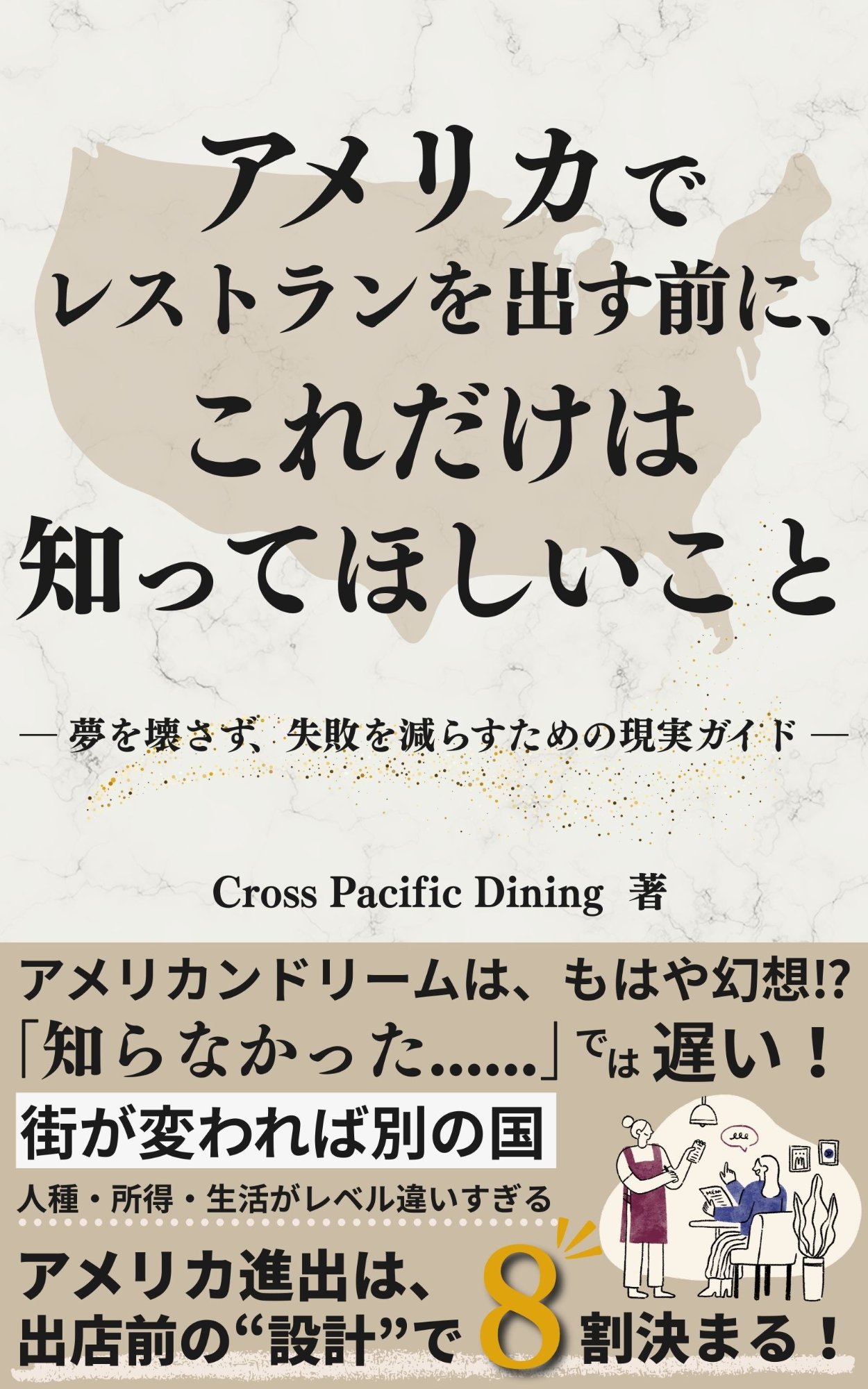
Opening a Restaurant in America
We help established Japanese chains enter the U.S. market.
Can your concept be translated to fast-casual?
In a 60-minute consultation, we'll assess how your food concept can be positioned for the American market.
Partner With Us →