Many Japanese restaurant owners come to America with confidence. They've built something successful at home, and they believe the same formula will work here.
Sometimes it does. More often, it doesn't. Not because the food isn't good enough, but because the rules of the game are completely different.
1. Success in Japan Does Not Equal Success in America
This is the hardest truth to accept. A packed restaurant in Tokyo, Osaka, or Fukuoka means almost nothing in LA, New York, or Houston. The customers are different. The expectations are different. The cost structure is different. What worked at home needs to be translated, not transplanted.
2. The Japanese Food Boom Is Tailwind, Not a Guarantee
Yes, Japanese food is popular in America. Sushi, ramen, izakaya — they're everywhere. But popularity doesn't mean profitability. The market is already crowded in the obvious categories. Standing out requires more than authenticity. It requires a clear answer to: "Why should an American choose your restaurant over the one next door?"
3. America Is Not One Market
California, Texas, and New York might as well be different countries. Minimum wage, labor law, tax structure, customer expectations, real estate costs — everything changes depending on where you are. Choosing the wrong state for your concept can doom the business before it starts.
4. Japantown Success Is a Special Case
If your restaurant thrives in Little Tokyo or Sawtelle, that's great. But don't mistake it for proof that America loves your concept. These neighborhoods attract people who already seek out Japanese food. The real test is whether non-Asian customers walk in without knowing what to expect — and leave wanting to come back.
5. People Problems Will Drain You the Most
Hiring is hard. Retention is harder. Training is a constant battle. And the rules around employment — harassment laws, overtime regulations, termination procedures — are nothing like Japan. "Watch and learn" doesn't work here. You need systems, documentation, and legal awareness from day one.
6. Costs and Lawsuits Are Landmines
Manager theft, ADA lawsuits, surprise tax bills, workers' compensation claims. These aren't edge cases. They're Tuesday. If you don't have a lawyer, an accountant, and proper insurance before you open, you're already behind.
7. The Next Opportunity Isn't Sushi or Ramen
The sushi and ramen markets are saturated. The next wave of Japanese food in America is fast-casual: karaage, tonkatsu, gyoza, tempura. Foods that are visual, customizable, and don't require explanation. The brands that figure out how to make Japanese food feel approachable to mainstream America will be the ones that scale.
The question isn't "Is my food good enough for America?" The question is: "Am I ready to build a business in a country where the rules, the people, and the market are fundamentally different from what I know?"
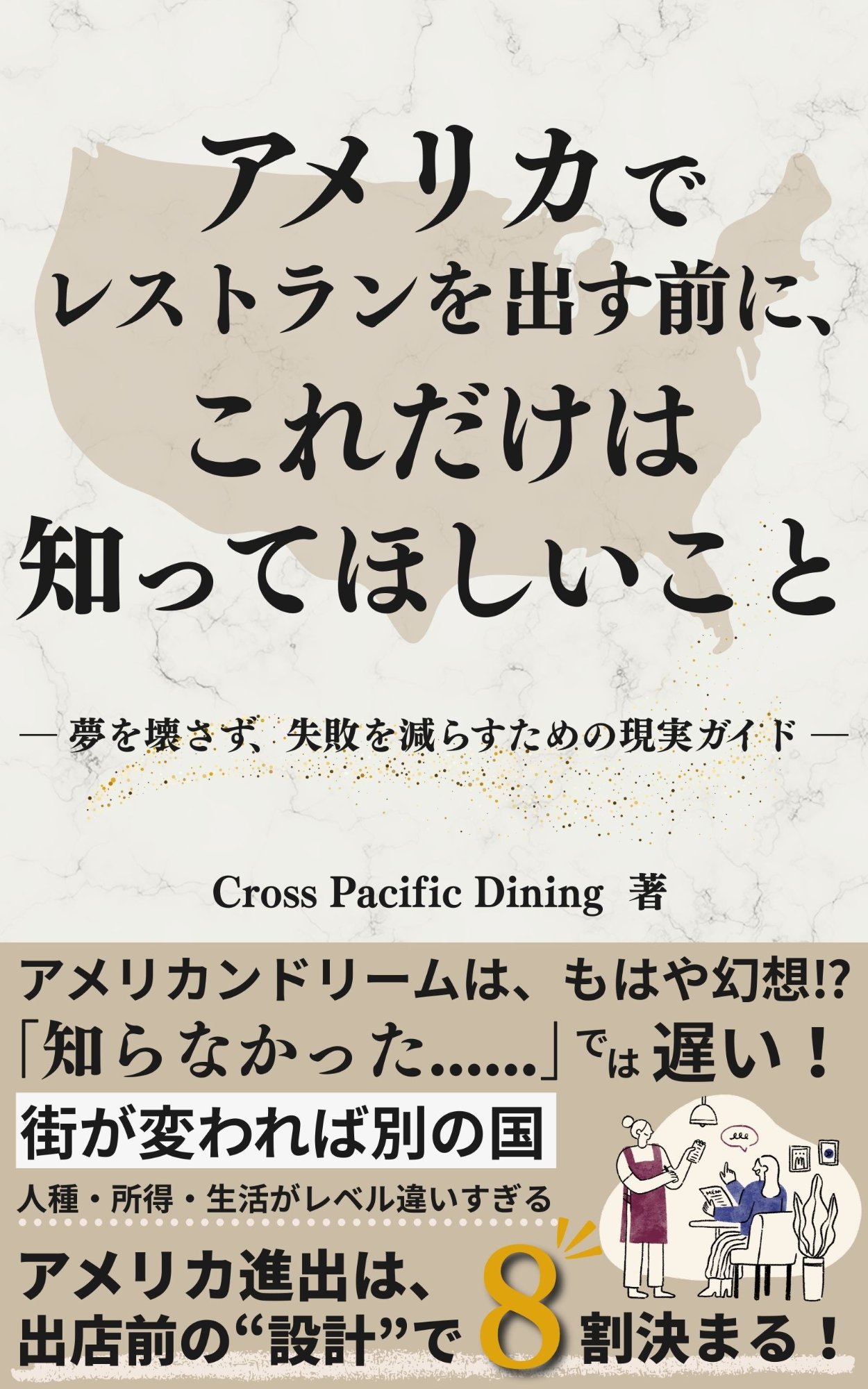
Opening a Restaurant in America
We help established Japanese chains enter the U.S. market.
Ready to assess your readiness?
In a 60-minute consultation, we'll clarify whether your concept fits the U.S. market — and what to do next.
Partner With Us →