The number one issue that drains Japanese restaurant owners in America isn't rent, food costs, or competition. It's people.
The Friction Between Japanese Craft and American Culture
Bringing a skilled chef from Japan seems like the obvious move. And the technical ability is usually excellent. But friction arises not from skill gaps — it arises from fundamentally different assumptions about hierarchy, feedback, and work-life boundaries. What's "normal" correction in a Japanese kitchen can be perceived as harassment in an American one.
"I Just Said It Normally" Won't Protect You
In America, intent doesn't matter — impact does. Tone, word choice, setting — any of these can turn a routine correction into a legal complaint. "I didn't mean it that way" carries no weight. The only protection is systems: documented procedures, clear policies, consistent application.
Trust the System, Not the Person
Japanese business culture runs on trust. American restaurant management runs on systems. Cash controls, inventory checks, shift accountability, authority separation — leave any of these ambiguous and small losses accumulate into serious problems.
Training Can't Be "Figure It Out"
"Watch and learn" is how Japanese kitchens have trained for generations. In America, it doesn't work. You need manuals, checklists, videos — anything that makes training transferable and consistent regardless of who's teaching.
Don't expect less from your people. Expect more from your systems. That's not cold — it's the warmest thing you can do for everyone involved.
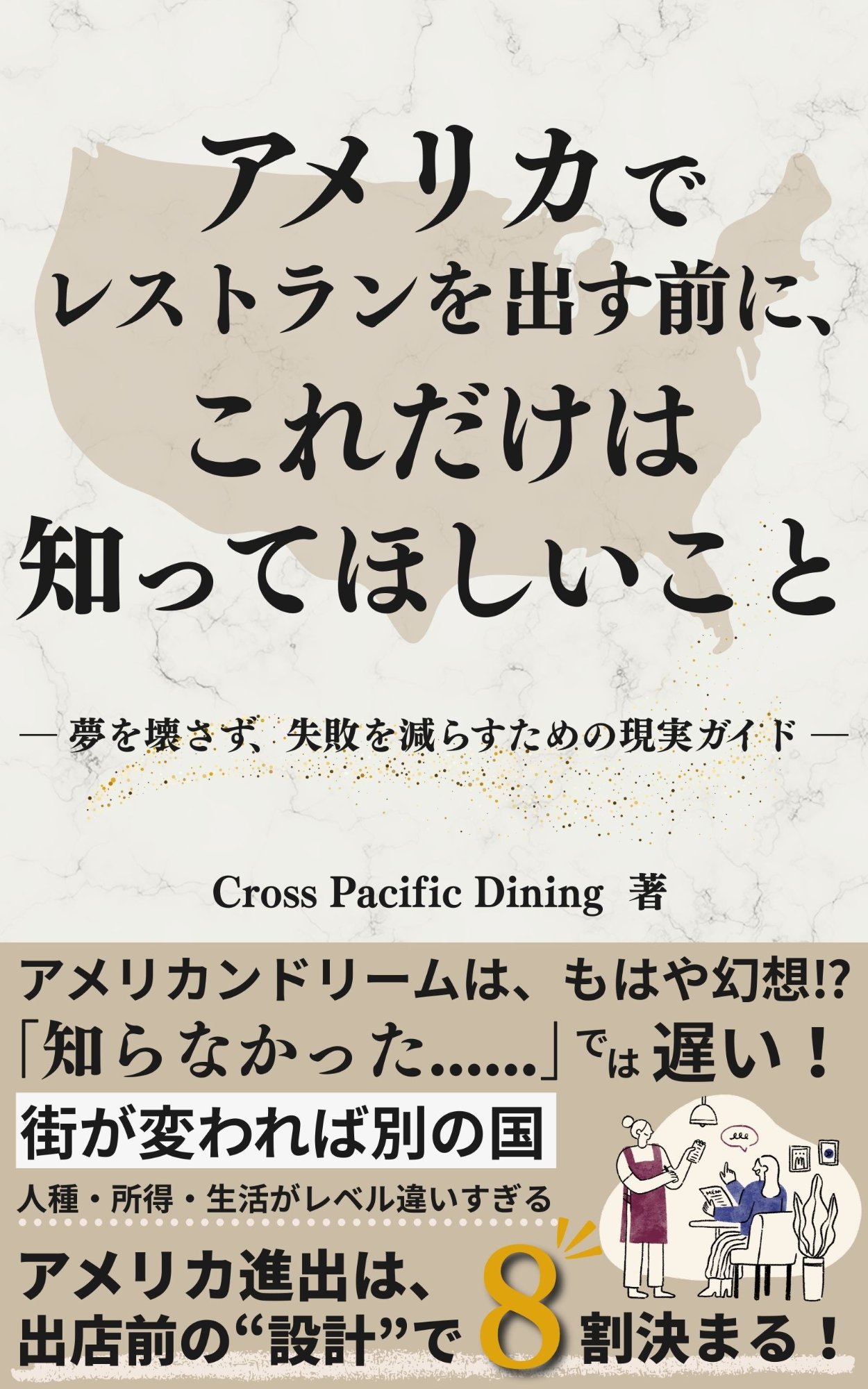
Opening a Restaurant in America
We help established Japanese chains enter the U.S. market.
Worried about staffing before you even start?
Let's map out a staffing strategy that works in the American market.
Partner With Us →